The Digital Couch: Unlocking the Immense Value of Virtual Therapy

The landscape of mental healthcare has undergone a radical transformation over the last few years. What was once considered a “niche” alternative to traditional office visits has rapidly become a cornerstone of modern wellness. Virtual therapy—also known as teletherapy or online counseling—has evolved from a temporary pandemic solution into a preferred permanent option for millions.
But the value of virtual therapy goes far beyond mere convenience. It represents a fundamental shift in how we prioritize and access emotional support. For our practice at The Therapy Centre, offering virtual care is about more than just a video link; it’s about removing the walls that traditionally stood between a person in need and the help they deserve.
1. Breaking Down the Barrier of Accessibility
For many, the hardest part of therapy isn’t the session itself; it’s getting there. Physical distance, mobility issues, or living in a rural area with few specialists can make mental health support feel like an unreachable luxury.
Virtual therapy equalizes care. It allows a client in a remote town to connect with a top-tier psychologist in a major city center. It means that someone with a physical disability or a chronic illness doesn’t have to navigate the exhausting logistics of transportation and office accessibility. By moving the “office” to a digital space, we ensure that your location or physical ability never dictates the quality of care you receive.
2. Flexibility for the Modern Life
We live in a world that rarely slows down. Between demanding work schedules, childcare responsibilities, and the daily grind of commuting, finding a two-hour block (including travel) for an appointment can feel impossible.
The value of virtual therapy lies in its ability to integrate seamlessly into your life. * The “Lunch Hour” Session: Professionals can take a session from a private office or even their parked car during a break.
The “Parenting Pivot”: Parents can speak with a therapist while their child is napping or at a nearby activity, eliminating the need for expensive childcare.
Consistency: When life gets chaotic—be it a snowstorm in Oakville or a flat tire—you don’t have to cancel. You simply log in. This consistency is vital for therapeutic progress.
3. The Comfort of Your Own Space
There is a unique psychological advantage to receiving therapy in your “natural habitat.” Traditional offices are designed to be calming, but they are still clinical, unfamiliar environments.
In virtual therapy, you are in control of your environment. You can sit in your favorite chair, have your pet beside you for comfort, and even hold a warm cup of tea. This increased sense of safety often leads to “disinhibition”—a phenomenon where clients feel more comfortable opening up and being vulnerable sooner than they might in person. When the nervous system feels safe at home, the real work of healing can happen more efficiently.
4. Clinical Efficacy: Does It Actually Work?
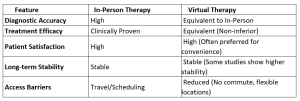
One of the most common questions is: “Is it as good as being in the room?” The scientific consensus is a resounding yes. Numerous studies, including research published by the American Psychiatric Association (1) and the Journal of Affective Disorders (2), show that virtual therapy is just as effective as in-person care for a wide range of conditions, including:
- Anxiety and Depression
- PTSD (Post-Traumatic Stress Disorder)
- CBT (Cognitive Behavioural Therapy) applications
- Relationship and Couples Counselling
The “therapeutic alliance”—the bond between you and your therapist—is not dependent on physical proximity. It is built on empathy, active listening, and trust, all of which translate powerfully through high-definition video.
5. Reducing the Stigma
While society has made great strides in destigmatizing mental health, many people still feel anxious about being seen entering a “Psychologist” or “Therapy” building. The privacy of virtual therapy offers a discreet gateway to care. For someone taking their very first step into therapy, the ability to do so from behind a screen provides a layer of anonymity and protection that can make the difference between seeking help and suffering in silence. It meets people exactly where they are—both emotionally and physically.
6. A Cost-Effective Solution
While the session fee itself is often the same, the “hidden costs” of therapy vanish with the virtual model. You save money on:
- Gas and parking fees.
- Public transit fares.
- Time away from work (unpaid leave).
- Childcare or eldercare.
By making therapy more affordable in the long run, it becomes a more sustainable habit rather than a short-term fix.
Choosing the Right Path Forward
At The Therapy Centre, we recognize that mental health isn’t “one size fits all.” While we love welcoming clients into our beautiful offices in Oakville, Hamilton, and Toronto, we see the profound impact that our Virtual Location has on our community.
Virtual therapy isn’t just a “backup plan”—it is a sophisticated, evidence-based, and deeply personal way to experience transformation. Whether you are dealing with a life transition, a formal diagnosis, or simply the weight of daily stress, the “digital couch” is ready for you.
References:
American Psychiatric Association (APA)
The APA provides a comprehensive overview of “Telepsychiatry,” including its benefits, settings, and evidence for effectiveness. They explicitly state that telepsychiatry is equivalent to in-person care in diagnostic accuracy and treatment effectiveness.
- Article: What is Telepsychiatry?
- Key Resource: APA Evidence Base for Telepsychiatry
2) Journal of Affective Disorders
This specific study is a landmark randomized controlled trial comparing internet-based interventions with face-to-face treatment for depression. It concluded that online therapy is not only equally beneficial but, in some cases, showed more stable long-term results during follow-up.
- Study Title: Internet-based versus face-to-face cognitive-behavioral intervention for depression: a randomized controlled non-inferiority trial
- Authors: Birgit Wagner, Andrea B. Horn, and Andreas Maercker.
- Link: PubMed Central (Abstract and Link to Full Text)
- DOI: 10.1016/j.jad.2013.06.032
Summary of Research Findings
To help you visualize the comparison between these two formats, here is a quick summary of the findings from these sources: